
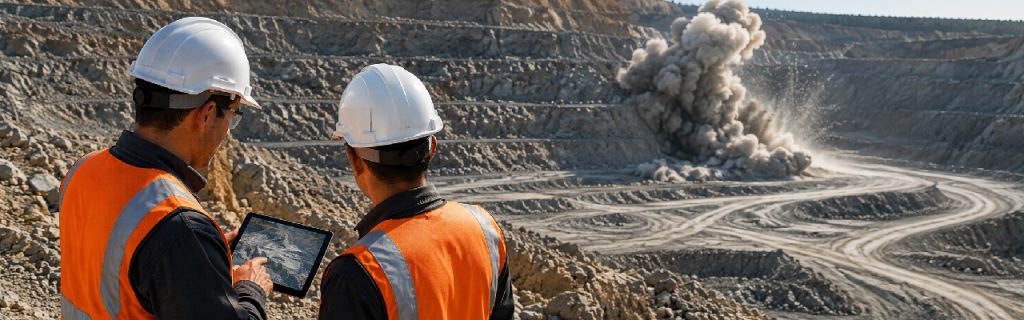
Rock excavation has been practiced since ancient times, with explosives becoming widely used during the Industrial Revolution due to increasing demand for minerals. Although blasting remains one of the cheapest and fastest methods of rock breaking, environmental concerns, noise, vibrations, and public awareness have increased the need for safer and better-controlled excavation methods. Ripping is an important alternative, particularly in softer rock, but its productivity decreases with increasing rock hardness and it requires higher capital investment. Therefore, selecting between blasting and ripping is a critical decision in mining and project execution.
Seismic velocity and electrical resistivity methods can be used to assess rock rippability and determine suitable areas for ripping. While seismic methods have limitations in obtaining detailed information at specific locations, resistivity provides additional information about rock properties with depth. The study emphasizes that blasting near sensitive structures requires proper documentation, monitoring, and adherence to sound and vibration limits. It concludes that blasting should be adopted carefully, while ripping is a suitable alternative for softer rock, with a combination of seismic and resistivity methods providing more comprehensive information for excavation planning.
Download Blasting AND/OR Alternates: Selecting/Choosing the Alternates
- Blasting AND/OR Alternates: Selecting/Choosing the Alternates
- Review of Studies on Ground Vibrations and the Future Needs for Research.
- Field Evaluation of Stemming Plugs in Limestone Mining
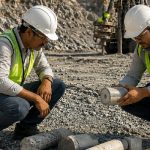
- Blasting Related Litigation

- Operating a Quarry
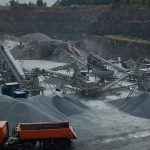
- Selecting a Seismograph

- Selecting Quarry Area
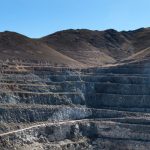
- Blasting/Excavation Litigation

- Safe Distance for Blasting

- Crusher Layout
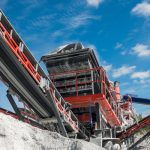
- Excavation Planning
- Contractors Evaluation
- Blasting Damage